Social
Instagram Marketing for Small Hotels: A Practical Plan
Instagram marketing for small hotels: profile, grid, Reels, Stories highlights, collabs and a link in bio built to send guests to your direct booking page.
By Tamara8 min read
Instagram marketing for small hotels works when the account answers one question quickly: what does it actually feel like to stay here? A clear profile, a grid that shows rooms, food and people, Reels for reach, highlights for the practical details and a link in bio that goes straight to your direct booking page are enough. You do not need a big team or a big following.
What should a small hotel's Instagram profile include?
Your profile is your shopfront. Visitors decide in a few seconds whether to look further.
- Name and handle that match your property name as closely as possible, so people can find you by searching.
- A bio that says what, where and for whom. "Six-room villa hotel in Canggu. Rice-field views, breakfast by the pool." Short, specific, no slogans.
- A profile photo that is clear at tiny size: a logo mark or a recognisable detail.
- A booking link. Instagram's own help says you can add up to five websites to your profile and rearrange their order, and that anyone can see them, on Instagram or not.
- A professional account, which gives you insights and business contact options.
How should you use the link in bio?
Put your direct booking page first. That is your most valuable link, so it should be at the top and it should be the page a guest can act on, not your home page with six menus.
A sensible set of links for a small property:
- Book direct (your booking engine or enquiry page).
- Rooms and rates.
- Current offer or season note.
- Guest guide or location page.
- WhatsApp or contact, if you handle enquiries that way.
Check the links monthly. A broken booking link is the most expensive typo you can make. Keep the landing pages consistent with what you post. If the Reel showed the pool at sunrise, the page they land on should show it too. Our guide to hotel website photos that convert explains why.
How should you plan your grid?
The grid is the evidence. A new visitor scrolls it to check that the place is real, current and their kind of stay.
A grid that works for a boutique hotel usually has a rotating mix:
- Rooms and views. Real, bright, honest, with at least one shot of the bed and one of the view.
- Food and drink. Breakfast and the signature drink are what guests share.
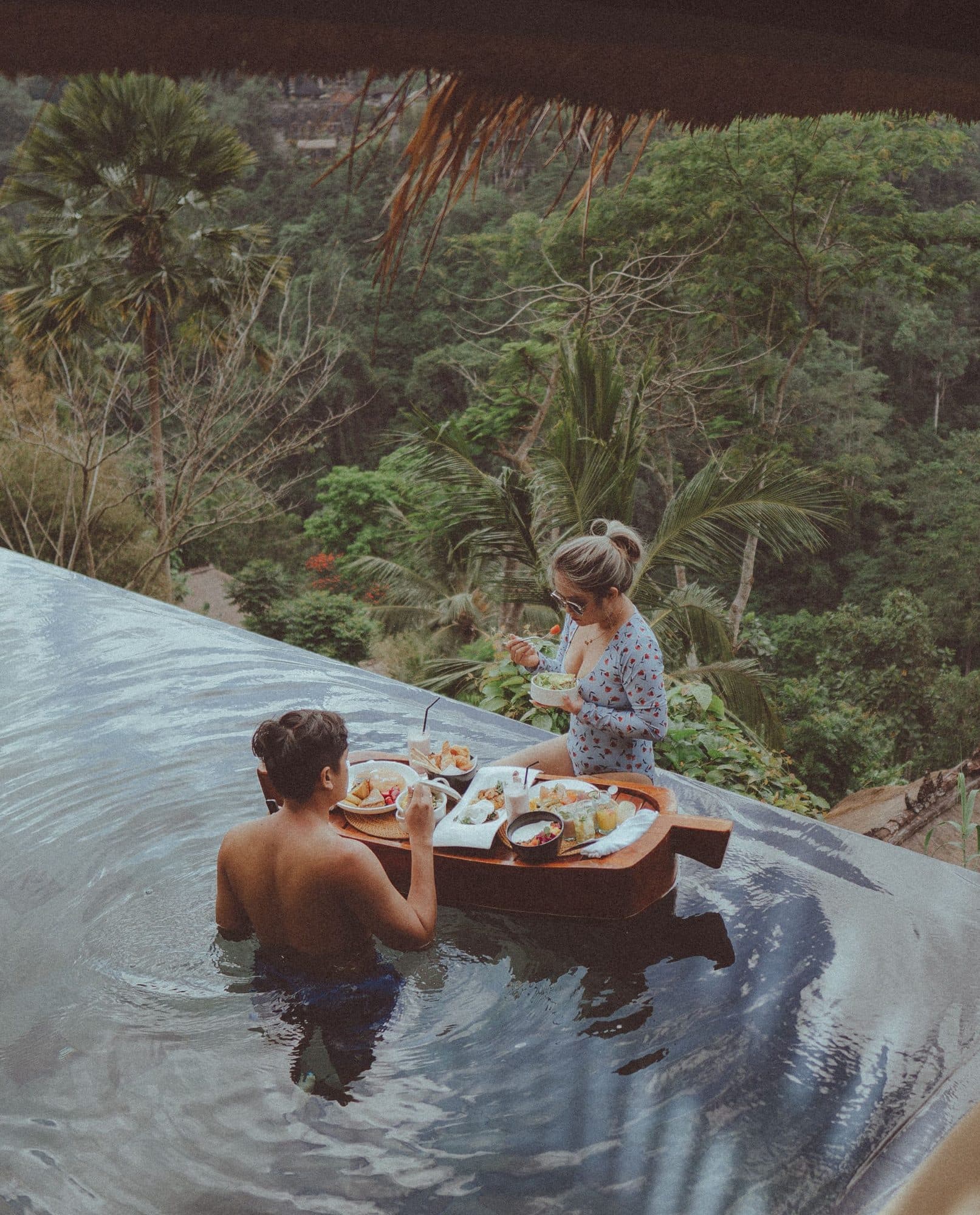
- People in the space. A back turned to the view, a hand on a coffee, someone mid-swim. These carry the feeling of the stay.
- The area. The beach path, the market, the surf break.
- Behind the scenes. The kitchen, the gardener, the laundry on a line.
- Guest moments, with permission. Real guests, tagged.
Avoid a feed made only of empty rooms and drone shots. They look like every other listing. If you only have empty rooms right now, that is a content problem and the fastest fix is a shoot with a person in frame. Our Reels shot list for hotels gives a list you can follow.
How often should you post?
Instagram does not set a quota, so this is our rule of thumb for a small team: one Reel and one carousel or photo post a week, with Stories whenever something worth showing happens. A steady rhythm is more useful than a flurry. If you cannot keep it up, post less and make each post better.
How does Instagram decide what to show?
Instagram has explained that it does not use a single algorithm. Its ranking explainer says that Feed, Stories, Explore and Reels each have their own ranking, built from different signals. This explainer dates from earlier years and the platform changes, so treat it as direction rather than a rulebook.
What it says, in plain terms:
- Feed looks at the viewer's own activity, information about the post, information about the creator and how they have interacted with you before. It lists time spent on a post, comments, likes, shares and profile taps among the most important predicted interactions.
- Stories rely on viewing history, engagement history and closeness.
- Explore leans more heavily on how popular a post is, because it recommends content from accounts people do not follow.
- Reels focus on entertainment value and predictions such as reshares, completion, likes and audio engagement.
The practical conclusion is useful: make posts people stay on, send to a friend and save. A saved post of a villa is someone planning a trip. A shared Reel is someone saying "we should go here".
How do you make Reels that bring bookings?
Reels are the main way a small hotel reaches people who have never heard of it. Instagram says Reels ranking considers predictions about reshares and completion, so you want clips that are short enough to finish and good enough to send.
Ideas that work for independent properties:
- The arrival. Gate, path, door, view, in one continuous move.
- A slow morning. Curtains open, coffee, pool, breakfast tray.
- A room tour in 15 seconds. Bed, bathroom, terrace, with a one-line voiceover.
- "Three things guests ask before booking." Answer them on camera.
- A local guide. "Where we send guests for dinner."
Film vertically, in natural light, with the best moment in the first second. Add on-screen text for people watching without sound, and a closing line like "Link in bio to book direct". Our vertical video service is built around this.
How do you reuse a Reel?
One shoot can fill several places. The same clips can run as a Reel, a TikTok, a short clip on your website, a Story and a paid ad. Our guides on TikTok for hotels and UGC in Meta ads show how to stretch footage across them.
How do Stories and highlights work for hotels?
Stories are for the day-to-day: today's breakfast, a new arrival, the weather. Highlights are for the permanent answers. Instagram's help page explains that stories added as highlights stay on your profile until you delete them. You choose the stories, name the highlight and pick a cover, and you can edit it later by adding or removing stories.
Treat highlights as a mini website under your bio. A good set for a small hotel:
- Rooms. One story per room type, with the bed, the view and what is included.
- Book. How to book direct, what is included, check-in and check-out.
- Eat. Breakfast, menu, dietary notes.
- Around. The beach, the market, the walk.
- Guests. Tagged posts and thank-yous, with permission.
- Season. A wet-season, summer or event highlight that you update. For Bali, our note on wet-season content shows how.
Design covers to match your colours so the row looks intentional, and keep names short enough to read.
How do collabs and creators help?
A collab post is shared by two accounts. Instagram's help says the author can tag public or private accounts as collaborators, who can accept or decline. If they accept, the post appears on their profile and goes to their followers' feeds, and the post is linked to both accounts. The original author keeps control and can add or remove collaborators, and if the author deletes the post it disappears from all profiles.
For a hotel, that makes collabs a good fit for:
- A creator you commissioned to make content, if you both agree to publish it that way.
- A local business, such as a surf school, a ceramics studio or a favourite cafe, that shares your audience.
- A wedding or retreat planner using your venue.
Agree the details first: who posts, when, which clips, how long the content can be used, and where else you may use it. Our guide to how to brief a content creator has a template, and usage rights for hotel content explains what to put in writing.
This is also where UGC rather than influencer marketing matters. You are paying for content you can use across channels, not for access to someone's followers. Read what is hotel UGC for the difference.
How do you get more saves and shares?
Saves and shares are the strongest signs that someone is planning a trip, and they are the signals Instagram describes among its ranking inputs. You encourage them by making posts worth keeping.
- Carousels with a practical payoff. "What a three-night stay looks like", "Where to eat within a ten-minute walk".
- Specific captions. Give a tip, a price range note or a seasonal detail.
- Clear prompts. "Save this for your next Bali trip" does work when the content is genuinely useful.
- Real moments. Posts that look like a friend's trip get sent to friends.
- Alt text. Instagram lets you add and edit alt text under "Accessibility", which screen readers use, and it lets you improve the automatic descriptions. Write a plain sentence describing the image.
How do you turn Instagram attention into direct bookings?
Followers are not bookings. Build the route.
- Reel or carousel introduces the property.
- Profile shows rooms, rates and a clear booking link.
- Highlights answer the practical questions.
- Direct messages get a reply within hours, with dates and a link.
- Booking page matches what the guest saw.
Messages matter more than people expect. Someone asking "do you have 12 to 15 March?" is closer to booking than anyone who liked a photo. Set up saved replies for common questions and tell guests the best way to book. Our piece on direct bookings beyond Instagram goes further.
A weekly rhythm for a small team
- Monday: plan the week's one Reel and one carousel from your content library.
- Midweek: post the Reel, reply to comments for the first hour or so.
- Weekend: carousel or photo post, plus Stories from the property.
- Every day: answer messages and share one real moment to Stories.
- Monthly: check your link in bio, refresh one highlight and look at Insights for what people saved or shared.
If it is too much, a monthly content retainer removes the planning and shooting, so you only handle replies and bookings.
Common mistakes
- A beautiful feed with no booking link. The guest wants to book and cannot.
- Posting only empty rooms. There is nothing to feel.
- Over-polished content. Guests trust content that looks like a friend's.
- Ignoring messages. Slow replies lose bookings.
- Hashtag walls. A few relevant ones are enough.
- No licence for creator content. Agree usage in writing before you post it.
- Buying followers. They do not book and they weaken your engagement signals.
The short version
- A clear profile with a direct booking link first in the bio is the base of everything else.
- Use the grid to show rooms, food, people and place. Aim for a steady weekly rhythm rather than bursts.
- Reels reach new people, carousels earn saves, and Stories highlights answer the practical questions.
- Collab posts share content with a partner's audience, and creator content should come with written usage rights.
- Treat messages as bookings: reply quickly, give dates and a link, and make the booking page match the post.
If you would like a library of Reels, photos and highlights shot on your property, a Content Stay or Content Retainer is a good place to start, and you can reach us here.