Ads
UGC Ads for Hotels: Hooks, Cutdowns and Testing
UGC ads for hotels on Meta and TikTok: hooks that stop the scroll, cutdowns, testing, how partnership ad permissions work, and landing pages that match.
By TamaraUpdated 10 min read
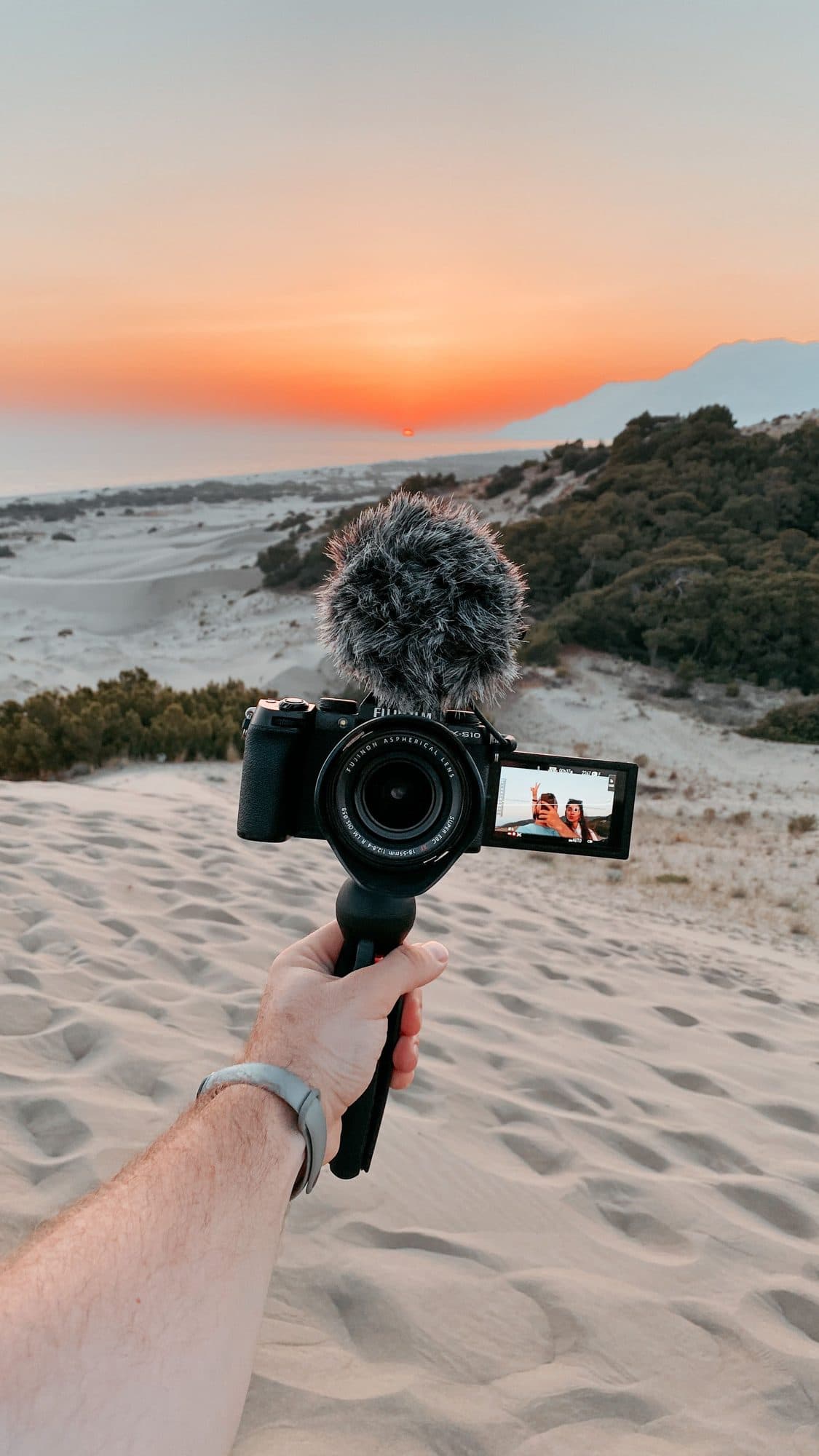
UGC ads for hotels work when they look like a guest sharing a real moment and still sell a specific room, a specific view and a specific reason to book direct. This guide covers the hooks, cutdowns, testing habits and landing page details that make the difference. If you are new to the term, start with what hotel UGC actually is.
I'm Tamara, and the ad creative we make for boutique hotels and villas follows the same playbook each time: a strong first second, one clear idea, and a page that finishes the story the ad started.
Why do UGC-style ads suit hotels?
People booking a stay are trusting a stranger with their holiday. A polished brand film shows what you say about the place. A creator filming her own arrival shows what it is like to be there, which is the real question.
UGC-style creative tends to suit hotels for a few reasons:
- It feels like a recommendation, which is how many guests actually find places.
- It shows the property at human scale: the walk from reception, the sound of the pool, the breakfast arriving.
- It is cheap to vary. One shoot can produce many hooks and cutdowns.
- It works across placements because it is vertical and captioned from the start.
It does not replace your photography. It sits alongside it. Our ad creative service is built on that mix.
What makes a good hook for a hotel ad?
The hook is the first second or two. On a phone, people decide almost instantly, so the opening frame needs to show something specific and worth watching.
Hooks that tend to work for properties:
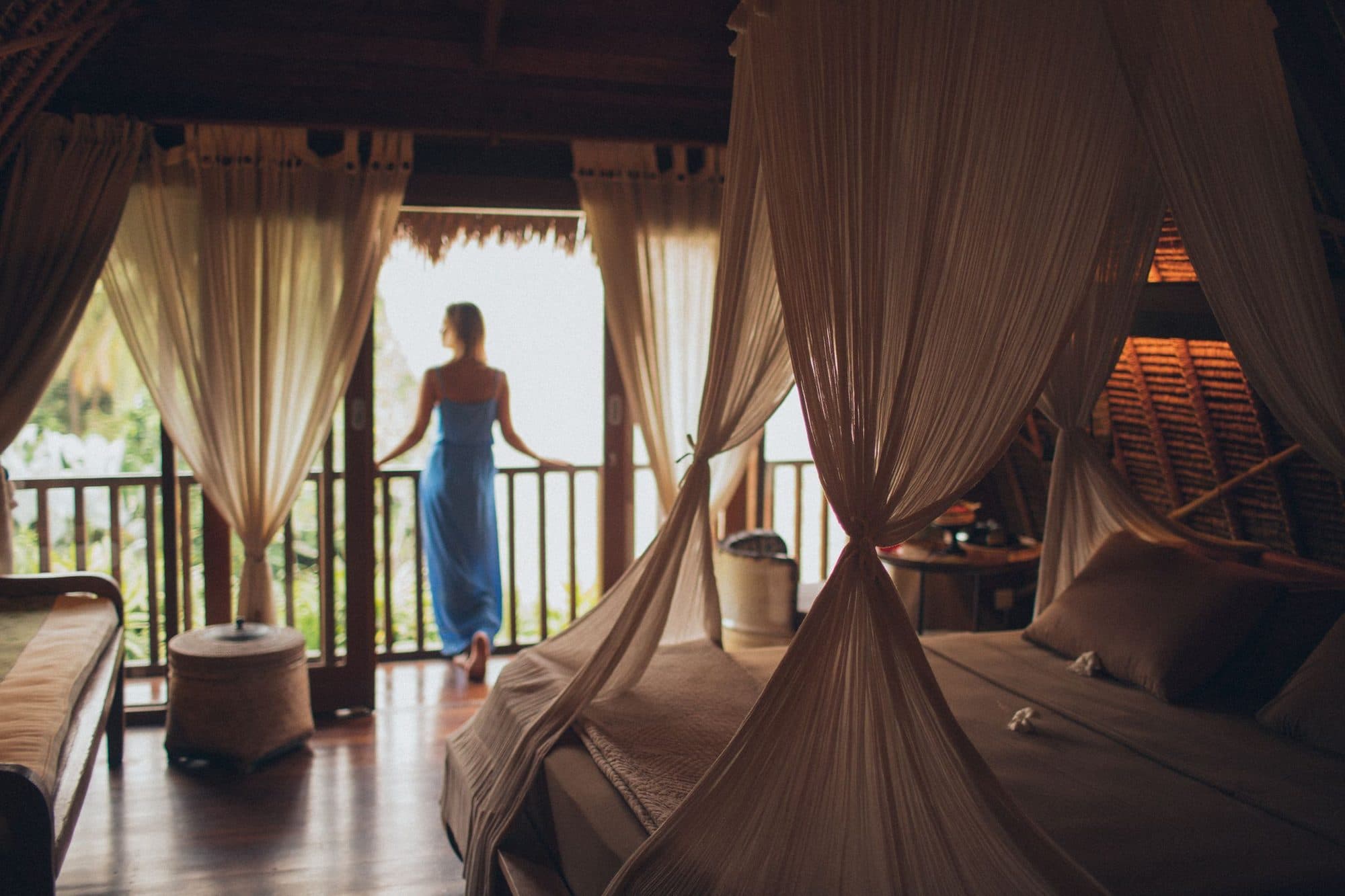
- The reveal. A door opens onto the view, a curtain pulls back, a gate swings open onto the pool.
- The first-person question. "I didn't expect this from a room under a certain budget" works as a pattern if it is true. Never claim what the property cannot prove.
- The sensory open. Water pouring into a glass, breakfast being lowered onto a floating tray, rain on a leaf. Sound and movement together.
- The small detail. An outdoor shower, a handwritten welcome note, a rattan headboard.
- The pain-point flip. "Looking for a quiet stay near the beach that isn't a resort?" followed by a view of your villa.
Avoid beginning with a logo, a long establishing drone shot or a list of amenities. Save the facts for the middle.
How should a hotel UGC ad be structured?
A simple structure that holds up across properties:
- Hook: a specific, surprising or beautiful moment.
- Proof: two or three clips that show the room, the view and the experience.
- Detail: one or two things that make this property different.
- Prompt: a plain call to action, like "Dates and rates on our site".
Keep voiceover or on-screen text short and spoken the way a person talks. Captions on, always. Many people watch with sound off.
Which cutdowns should you make from one shoot?
One shoot can supply a whole set of ads if you plan for it. Think in lengths and angles:
| Version | Length idea | Job |
|---|---|---|
| Short hook cut | Very short, one moment | Cold audiences, quick view |
| Standard story | A bit longer, hook + proof + prompt | Main prospecting ad |
| Talking-to-camera | A creator in the room explaining the stay | Warm and mid-funnel audiences |
| Room-specific cut | Focused on one room type | Retargeting people who looked at it |
| Offer cut | Dates or an inclusion highlighted | Seasonal pushes |
Aim for variety in the first second, not just in length. The same clips can open on a different hook for each version.
How do you test UGC ads without wasting budget?
Keep the testing simple and honest.
- Change one thing at a time. Test hooks, or captions, or the call to action, not all three at once.
- Compare ideas, not tiny edits. A reveal hook against a sensory hook teaches you more than two nearly identical cuts.
- Judge on what you actually care about. For hotels that is booking intent, enquiries and cost per booking, not likes. Use your own account data.
- Give each version time. Cutting an ad after a few hours rarely tells you anything. I won't give you a number of days that works everywhere, because it depends on budget and season.
- Refresh before fatigue. If the same audience keeps seeing the same ad, results usually drift. Keep a pipeline of new hooks.
A monthly content shoot makes this easier, because there is always something new in the library. See how a content retainer works for properties that run ads all year.
What are partnership ads, and should you use them?
A partnership ad, often called whitelisting, lets you run an ad through a creator's handle. The creator gives permission, and you control the budget, audience and the booking link.
For a hotel this can help because:
- The ad appears with a human name and face, not just a brand.
- Comments and reactions sit on a real person's post.
- You can test whether creator-led versions beat brand-led versions.
Before you do it, agree these things in writing:
- Which posts or videos can be used and for how long.
- Who approves the caption and the call to action.
- Whether there is any extra fee for running through the creator's handle.
- How long the permission lasts and how it can be ended.
If you are unsure what to put in an agreement, read our guide to usage rights for hotel content. On our side, whitelisting from Tamara's account is available on request.
How do partnership ads work on Meta, in the platform's own words?
At the time of writing (October 2026), this is what Meta's own pages say, and it is worth reading before you sign anything with a creator.
- Meta's developer documentation describes partnership ads as ads that feature brands and partner accounts in the header and use signals from both accounts. That is Meta's description, not a result we can promise you.
- Permission can be given at two levels. Meta's Instagram help page separates content-level permission, for individual posts, stories or reels, from account-level permission for content that tags the advertiser. A creator can also share a partnership ad code for a single piece of content.
- If the creator tags you in the paid partnership label, Instagram says the "Allow brand partners to promote" setting switches on automatically for 28 days. Check what applies after that window, and ask the creator to confirm in writing.
- Per the same page, creators cannot edit content once it is used as a partnership ad, though they can delete it, which stops the ad. Put that in your agreement: you want to know before a creator deletes a post that is carrying your budget.
The practical lesson for a hotel is simple. Treat the permission as a time-limited licence and diarise the dates. Do not assume that because a reel is tagged, you can run it for six months.
What about TikTok?
If your guests are on TikTok, the equivalent is Spark Ads. TikTok's help centre explains that a creator opens the video, goes to ad settings and generates a post code, which the brand enters in TikTok Ads Manager to authorise the post. The same page says brands can authorise up to 20 codes at a time, and that a private video becomes public once it is used in a campaign. It does not state how long a code lasts or how long the ad can run, so ask the creator to state the period in writing. We go deeper on the organic side in our TikTok for hotels guide.
A creative brief you can paste into an email
If you are commissioning UGC-style ads from anyone, send them this.
| Line in the brief | Example for a boutique villa |
|---|---|
| The one idea | A private pool you can walk to from bed |
| Who it is for | Couples planning a quiet week, three to six months out |
| Must show | Arrival gate, bedroom, pool at breakfast, one honest caveat |
| Must not show | Anything not included in the nightly rate |
| Hook options (three) | The gate, the sound of morning, the honest guide |
| Format | Vertical 9:16, captions burned in, keep key text away from the edges |
| Where it runs | Reels, Stories, TikTok; plus the villa page |
| Permission | Partnership ad, named handle, start and end dates |
| Raw clips | Delivered unedited as well as cut |
The "must not show" line matters more than it looks. It protects you from the ad that promises a floating breakfast the villa only offers as a paid extra.
How do you read the results without fooling yourself?
You do not need a complex dashboard. Keep one simple log, one row per ad version, with these columns: hook, length, audience, spend, clicks to the landing page, enquiries and bookings. Then ask three questions each fortnight.
- Which hook brought the most enquiries, not the most clicks?
- Which version brought the cheapest enquiry that turned into a booking?
- Which ad is showing the same faces to the same people so often that it is starting to feel stale?
If bookings arrive by phone or WhatsApp, ask guests how they found you and note the answer. It is a rough measure, but it catches the bookings your ad platform cannot see.
What should the landing page do?
Many good hotel ads fail on the page after the click. The ad promised a floating breakfast and a jungle view, and the landing page opens with a generic homepage slider.
A landing page that matches the ad:
- Opens on the same visual. If the ad started with the pool, the page starts with the pool.
- Uses the same words. If the ad said "villa with a private pool", the headline should too.
- Answers the next question. Where is it, what does it cost, how do I check dates.
- Makes booking easy on a phone. A visible dates field and button above the fold.
- Reinforces trust. Real photos, a short video, and honest details.
If your booking engine shows a stock gallery, it is worth swapping in real property content. Our guide to direct booking content beyond Instagram covers where else your content should live.
What do you need to get right before running the ad?
- Your photos and video match the real room. An ad that over-promises costs you in reviews.
- You have the rights to use the footage in paid placements.
- Tracking is set up so you know which ad led to which booking or enquiry.
- Someone is responsible for replying to messages and comments quickly.
A simple first test for a boutique property
If you have never run UGC ads before, try this:
- Shoot one stay, with arrival, room, pool, breakfast and a sunset moment.
- Cut three hooks over the same core footage: a reveal, a sensory open and a talking-to-camera.
- Run them to one prospecting audience and one warm audience, with a landing page that matches.
- Keep the winner, replace the weakest, and schedule the next shoot.
Example concepts for a boutique villa
To make this concrete, here are three ad concepts we might brief for a private villa in Bali.
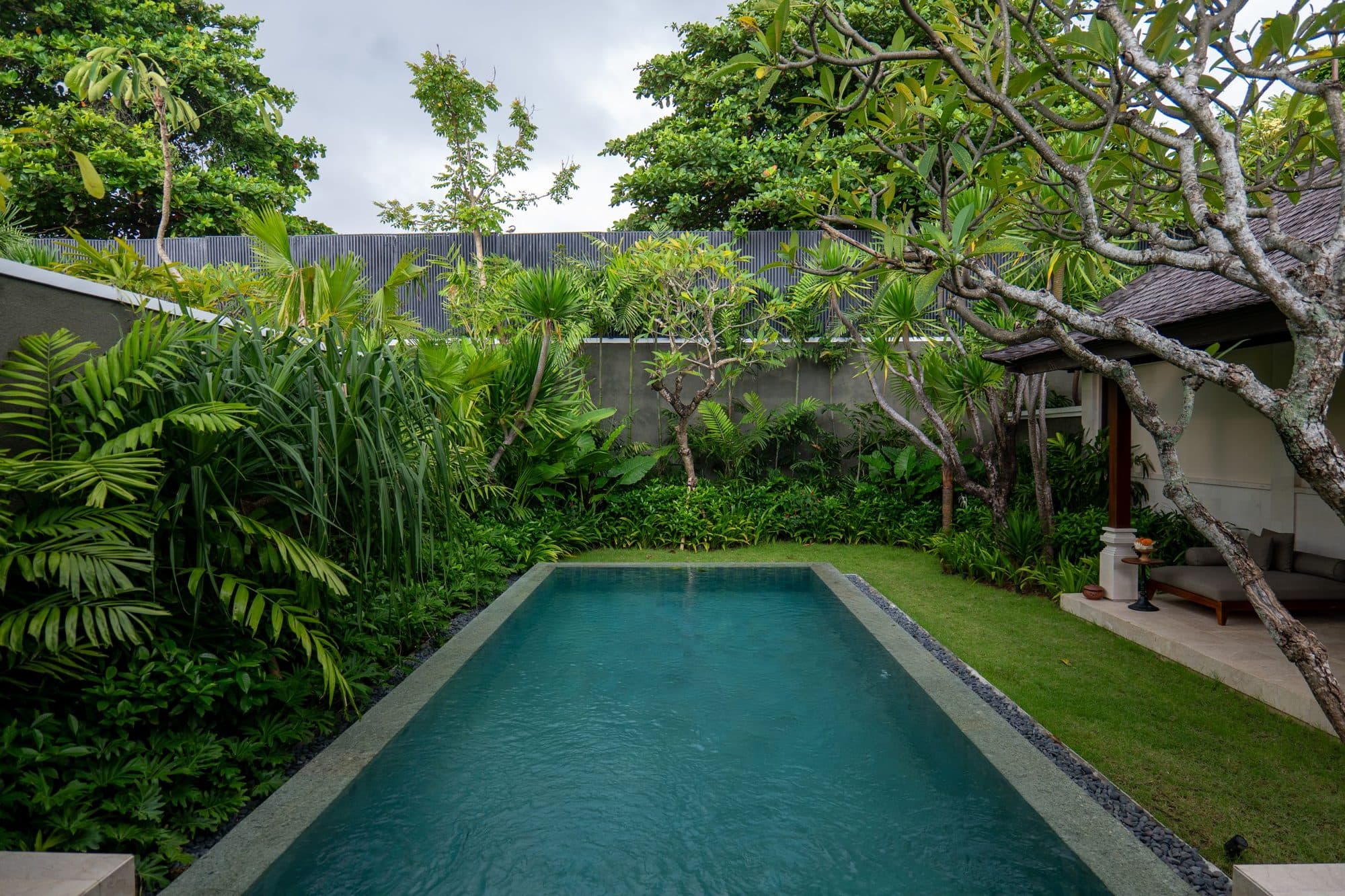
Concept one: the gate. A hand pushes open a wooden gate and the pool appears beyond a wall of green. Cut to the bedroom, then breakfast being set down by the water. Caption: "Private pool, ten minutes from the beach. Dates on our site." The first second carries the whole idea.
Concept two: the honest guide. A creator in the villa kitchen speaks to camera: three things she liked about the stay and one thing to know before booking, such as the path to the beach being a short ride. A small honest caveat often makes the rest more believable.
Concept three: a quiet morning. No voiceover, just sound. Birds, a coffee cup, steam from the pool, a book. A single line of text at the end. This suits audiences looking for rest rather than a party.
Each concept can be cut short and long, giving you a handful of ads from one stay. Keep a log of which hook each version used, so your results teach you something next time.
How should you handle comments on ads?
Treat the comment section as part of the ad. People will ask about rates, distance to the beach or whether children are welcome. Have someone reply quickly, in a friendly human voice, and pin the answer to the most common question. A well-handled comment thread quietly does more selling than extra spend.
The short version
UGC ads for hotels work when the first second is specific, the middle shows real proof, and the landing page finishes what the ad started. Test ideas rather than tiny edits, agree partnership ad terms in writing, and keep fresh footage coming.
If you want creative built for this, see our UGC content and ad creative services, or talk to us about a shoot.