Strategy
Marketing for Tour Operators: Surf, Dive, Boats and Classes
Marketing for tour operators made practical: POV content, booking platform photos, reviews and showing safety on camera for surf schools, dive centres and more.
By Tamara9 min read
Marketing for tour operators comes down to one question travellers ask silently: what will my day actually be like, and will I be safe and looked after? Surf schools, dive centres, boat trips and cooking classes win bookings by showing the day itself, through your own first-person footage, honest pictures on booking platforms, steady reviews and visible care.
I'm Tamara. I film experiences around Bali, and the best-performing content for operators is rarely the glossiest. It is the guide laughing while sorting a wetsuit, the view from the boat, the first wave someone stands up on.
What do customers need to see before booking a tour?
Anyone booking an experience is buying a promise about a day they cannot preview. Fear and doubt sit just under the surface: Will I be the worst one there? Is it safe? Is it worth the money? Where do I meet?
Your content should answer them in this order:
- What it is. A clear picture of the activity, at a real moment.
- Who is running it. Faces, names and credentials.
- How it feels. The sound, the colour, the group.
- What happens, step by step. Meeting, briefing, activity, finish.
- Why it is safe. Equipment, ratios, briefings.
- What to do next. One clear way to book.
How do you use POV content for tours?
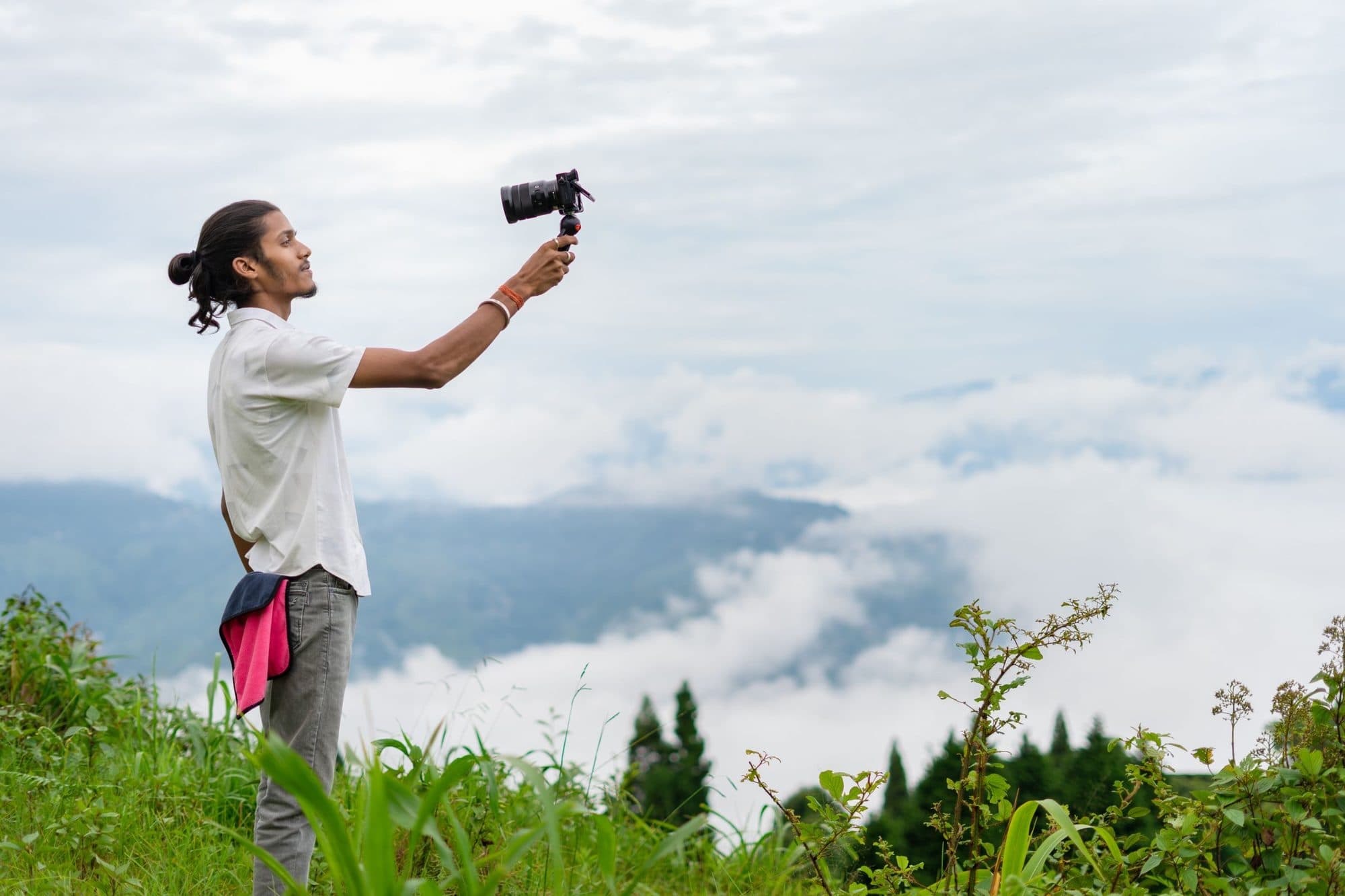
First-person footage is the closest thing to a free trial. A small action camera on a chest mount, a pole, a board nose or a head strap lets guests see what they will see.
What POV works for each type of operator
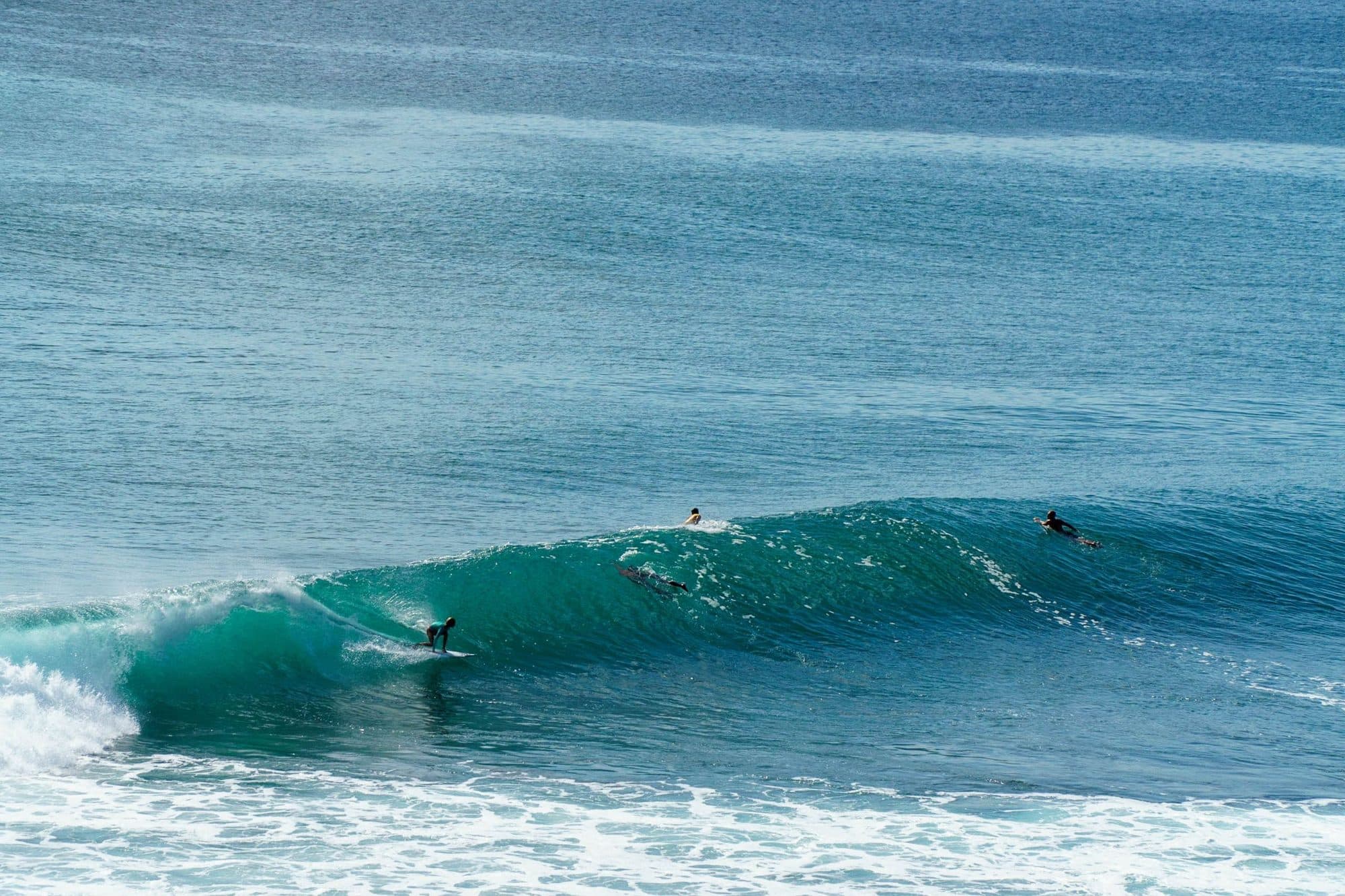
- Surf schools. The paddle out, the pop-up in the whitewater, the instructor's thumbs up. Wide shots from the beach for the group energy.
- Dive centres. The kit check, the descent, a turtle or a reef, the surface smiles. Underwater clips with a person in the frame give scale.
- Boat trips. Departing the harbour, spray, the first island, snorkelling, lunch on deck.
- Cooking classes. The market walk, hands chopping and pounding, the pan, the table at the end.
- Cultural and nature tours. A guide pointing something out, a guest's reaction, the thing you would not find without them.
Keep it honest
Do not show conditions you do not offer. If a clip shows a perfect empty wave and your school teaches on a crowded beginner break, say so. Guests who arrive to a different reality leave a different review. GetYourGuide's quality guidelines make the same point: photos should be directly related to the experience offered and not stock photos that do not accurately depict what the traveller will see or do.
Keep it short and vertical
Most operators do well with clips of 10 to 30 seconds for Reels, Shorts and TikTok, one idea per clip. Our guide to Instagram Reels shot lists shows how to plan a day of filming into a month of posts.
How should you set up photos on booking platforms?
Booking platforms are where many guests first meet you. Treat each listing as a shop window.
GetYourGuide's supply partner help centre has a whole section on photos, with articles on how to prepare to take photos of your experience, how to select and edit photos, and how to take photos using just your phone. The existence of that section tells you something: the platform itself sees photos as central to bookings. Its quality guidelines also say images should be clear, well composed, high resolution and not pixelated, and list blurry or poorly lit pictures as unacceptable.
A photo order that works
| Position | Shot | Why |
|---|---|---|
| 1 | The activity at its best moment | The thumbnail does most of the selling |
| 2 | Guests smiling mid-activity | Social proof without words |
| 3 | The guide with the group | Trust |
| 4 | The equipment and safety kit | Reassurance |
| 5 | The meeting point | Removes doubt |
| 6 | The view or the highlight | Reward |
| 7 | Food, drink or the finish | Closure |
| 8+ | Details, small groups, variations | Answer remaining questions |
Platform rules to respect
- Use your own images, or ones you have the rights to.
- Do not put phone numbers, emails, websites or social handles in descriptions where the platform forbids it. GetYourGuide's quality guidelines say listings cannot include direct contact details that encourage bookings outside the platform.
- Make sure pricing includes all mandatory fees.
- Keep descriptions accurate, comprehensive and consistent.
Policies change, so at the time of writing (October 2026) these are the published guidelines; check your own supplier portal before you update anything. Other major platforms, including Viator and Tripadvisor, have their own supplier guidance, which sits behind their operator sign-ins, so read yours directly.
How do you build a strong Google profile for an operator?
Many travellers search Google Maps before they book anything. Google says local ranking depends on relevance, distance and prominence, and prominence includes how well known you are, with review count and ratings part of the picture.
So give your profile what it needs:
- Choose the right category and complete every field.
- Add photos of the meeting point, the boats, the boards, the classroom and the team.
- Keep hours accurate through the seasons.
- Link to your booking page.
Google's photo guidance says images should be in focus and well lit, without significant alterations or excessive filters. Videos can be up to 30 seconds and 75 MB, at 720p or higher, so upload a short POV clip.
How do you earn and use reviews?
Reviews are the real marketing for experiences, because a stranger's five stars outweighs any brochure.
- Ask at the high. Right after the activity, at the beach bar or on the boat back, while the adrenaline is still there.
- Make it effortless. A QR code on the guide's lanyard, a link in the follow-up message.
- Reply to everyone. Google advises keeping responses short and honest, and acknowledging mistakes without taking responsibility for things outside your control.
- Never pay for stars. Google's guidance says offering free or discounted goods or services for reviews is strictly prohibited.
Feed the best lines back into your content: a screenshot in a Story, a quote over a clip, a line on your booking page. Ask the guest first.
How do you show safety on camera?
Safety is the biggest barrier for nervous first-timers, and the most under-used piece of content.
Show it plainly:
- The briefing. A guide at the whiteboard or on the sand.
- The kit check. Fins, life jackets, regulators, helmets, harnesses, being fitted.
- The ratios. One instructor per small group, visible in the frame.
- The first-aid kit and radio. On the boat, at the school, in the van.
- The pause. A guide checking each person before they enter the water.
- The credentials. Certification badges, logos and years of experience, shown as they are.
Do not exaggerate. Never imply you are safer than you are, and never use footage that shows a rule being broken. If the footage shows a hazard, it will be remembered.
How does a small operator plan a month of content?
You do not need a media team. You need one planned filming day and a simple calendar.
Week one: the hero day. Choose a session with good light, a friendly group and your best guide. Mount one camera for POV, keep a phone for behind-the-scenes, and ask a colleague to shoot from the shore, the deck or the classroom edge. Capture the arrival, the briefing, the activity, the finish.
Week two: the people. Short introductions from each guide: where they are from, how long they have been doing this, what they love about the job. Thirty seconds each, filmed in good light, with their agreement.
Week three: the details. Equipment close-ups, the meeting point, the snack, the view from the car park. These are the small, reassuring pictures that answer the last questions before someone books.
Week four: the proof. Screenshots of reviews (with permission), a guest saying thanks, a before and after of a nervous beginner who stood up on a board or breathed underwater. Then refresh your booking page photos with the best from the month.
Seasons and conditions
Experiences depend on weather, swell, visibility and tides. Show what each season is really like, and say so in the caption. A wet season boat trip with green hills and dramatic cloud can be as appealing as a dry season one if it is honest, and it stops guests booking on a false picture. Our piece on Bali wet season content goes into the idea in more depth.
Pricing and packages in content
Show what is included: gear, food, transport, photos, insurance. GetYourGuide's guidelines say prices should include all mandatory fees essential for the traveller to participate in the core itinerary as described, which is a sensible standard for your own website and Instagram too. Surprise charges at the meeting point are the fastest way to a poor review.
What to do with every clip
Give each clip a job before you shoot it: a booking page photo, a Google profile video, a Reel, an ad, an email header. If it has no job, it is probably not worth the battery.
What about people on camera?
Guests are the best content you have, and they need to say yes.
- Ask at check-in, with a short written form or a clear sign.
- Give people an easy way to opt out. A coloured wristband for "no filming" works well.
- Be especially careful with children. Get a parent's permission, and consider filming from behind.
- Say how you will use the content.
Our article on usage rights covers what to put in writing when a creator or guest is involved.
A tour operator marketing checklist
- Do your first three listing photos show the activity, the guide and the group?
- Is there at least one honest POV clip on your website and profile?
- Does the meeting point have a photo and a clear description?
- Is there a clip showing the safety briefing and kit?
- Are your descriptions accurate and consistent across platforms?
- Does your Google profile have current hours, photos and a booking link?
- Is a guide reminding every guest to review, with a link or QR code?
- Are you replying to every review?
- Have guests agreed to be filmed, and do you have it in writing?
- Do you reshoot each season so the weather and the group look current?
Should an operator hire a content creator?
If you run a great experience but your photos are a decade old, yes. A creator who joins a real session, films as a guest and then edits for your booking pages, your Google profile and Reels gives you a library to use for a year.
We make that content for experiences and wellness businesses in Bali and beyond, with a production team and the same honest approach. See how vertical video and ad creative can use the same footage.
The short version
- Answer the silent questions: what is it like, who runs it, is it safe, how do I book.
- Use honest POV footage and your own photos; platforms such as GetYourGuide ask for images that reflect the real experience.
- Order your listing photos from the activity to the guide, the kit, the meeting point and the finish.
- Ask for reviews at the high point, reply to all of them, and never give a perk for stars.
- Show safety on camera, and get written permission from anyone who appears.
If you want a day on the water, on the board or in the kitchen filmed properly, get in touch about a Content Day.